This guide explains how Pacc Insper can support procurement inspection workflows, from defining inspection conditions to verifying supplier readiness. It provides objective background on the terms, outlines typical decision criteria used by QA and sourcing teams, and includes a structured comparison of procurement-inspection approaches, requirements, and outcomes. Sources are noted where available, avoiding unverifiable claims.
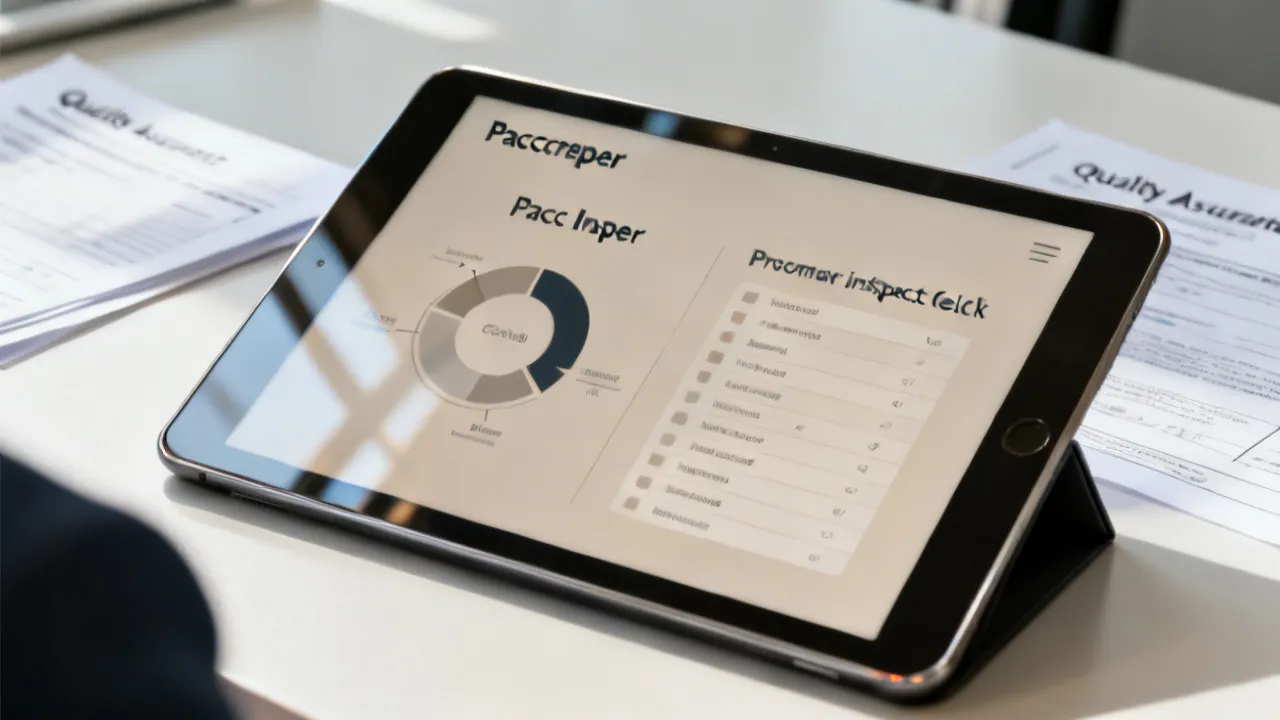
Using Pacc Insper as a reference point, procurement inspection becomes more defensible when it is tied to clear acceptance criteria, traceable documentation, and supplier capability checks. In practice, teams reduce delays by aligning inspection scope, test methods, and review responsibilities before purchase orders move into production or fulfillment.
Below, this guide is written from an industry expert’s perspective on how inspection-focused procurement processes typically work—what to define, what to verify, and what conditions are commonly required for smooth execution.
Because the provided keywords are sparse, it is helpful to treat Pacc Insper as an inspection-related workflow concept rather than a universally standardized technical term. In real procurement environments, teams often use internal shorthand for: (1) inspection planning, (2) inspection execution, (3) documentation control, and (4) corrective actions when results do not meet requirements.
In parallel, the isolated keywords (shown as blank placeholders in your prompt) can be interpreted as additional labels or internal system terms. Rather than asserting unsupported definitions, this article focuses on the operational practices that such terms usually represent in sourcing and quality management: ensuring that “what was ordered” matches “what is delivered,” and that inspection is auditable.
Procurement inspection is not only about catching nonconformities at the last minute. It is also a mechanism for:
For objective grounding, internationally recognized quality management frameworks emphasize risk-based thinking and control of documented information. For example:
In procurement, the “risk” is rarely limited to the physical characteristics of an item. It can also include risks such as missing documentation, unclear batch traceability, wrong labeling, incomplete compliance declarations, or failure to meet contractual testing requirements. A robust inspection system anticipates those risks before shipment becomes inevitable.
From an inspection-lead point of view, Pacc Insper can be understood as a structured approach that connects buying decisions with verification activities. Very organizations implement such an approach across these phases:
Teams that use inspection rigor early tend to ask three baseline questions:
At this stage, experts recommend locking the inspection plan to the purchase order and technical documents. That means inspection scope should not drift after suppliers have already scheduled production.
In mature organizations, planning is often formalized through documents such as:
A key practical insight is that procurement inspection fails most often when the plan is written after the supplier has started producing, or when the acceptance criteria are not “operational”—meaning inspectors still have to interpret tolerances that were not expressed in a measurable way. Planning is therefore not just administrative; it reduces ambiguity and disputes later.
It is also common to establish a “single source of truth” for requirements. When teams rely on email threads, separate spreadsheets, and non-version-controlled attachments, acceptance criteria can be inadvertently misaligned. A Pacc Insper-style approach typically promotes version-controlled specs and clear mapping between PO line items and the inspection plan.
Inspection success is often determined before any test equipment is used. A strong process assesses whether the supplier can consistently meet requirements:
Note: If your inspection approach is designed for regulated sectors, supplier qualification and document control often become mandatory rather than optional.
In practice, “supplier capability” is broader than statistical capability indices (like Cp/Cpk) even when those are used. Many suppliers can show capability through:
A well-run procurement inspection system recognizes that incoming inspection cannot fully substitute for upstream capability. When failures repeat, the “inspection-only” strategy becomes a cost center rather than a risk-control method. At that point, organizations often shift to stronger supplier qualification, enhanced sampling, or even qualification trials.
Another common capability element is measurement system readiness. Even if the supplier’s process is capable, poor measurement equipment, uncalibrated gauges, or inconsistent test methods can create false passes or false fails. Therefore, readiness checks often include:
When inspection occurs, the goal is not merely to generate a “pass” stamp. It is to produce auditable evidence. Experts typically ensure:
Operationally, inspection execution usually includes both physical checks and paperwork verification. Consider the following examples of “inspection evidence” that often becomes decisive during disputes:
A major reason to require raw and traceable results is that pass/fail decisions may not be enough later. If a customer complaint arises or an audit occurs, the organization needs to reconstruct what happened for specific lots and prove that the acceptance criteria were applied consistently.
Another operational best practice is to define how inspection interacts with material handling. For instance, if an item is inspected in incoming, the organization should clarify whether inspected items are quarantined, released automatically, or released only after document verification is complete. Many systems treat physical inspection and document approval as separate steps to avoid releasing stock based solely on test outcomes while documents remain missing or inconsistent.
Even well-prepared suppliers can produce nonconforming output. The inspection system should therefore specify:
A Pacc Insper-style workflow often defines an exception path that is fast, predictable, and documented. Without it, teams get stuck in delays such as “awaiting supplier explanation,” “awaiting quality review,” or “awaiting management approval,” which are not structured decision processes.
Common escalation stages include:
It is also important to define when waivers or deviations are allowed. In some cases, a deviation permits a supplier to deliver nonconforming material if it is evaluated and approved with risk acceptance. In other cases—especially where safety or regulatory compliance is involved—waivers are not permitted for certain characteristics. A strong inspection-centered procurement system includes these rules.
To make the decision process clearer, here is a practical comparison of common procurement inspection approaches. You can use it to map your current workflow to a more structured Pacc Insper-style model.
| Approach | Typical Use Case | What You Verify | Common Requirements | Key Risk if Misused |
|---|---|---|---|---|
| Incoming inspection | Verifying delivered items against PO/specification | Physical dimensions, appearance, packaging integrity, documentation completeness | Defined acceptance criteria, calibrated measurement tools, inspection plan | Late detection leading to rework, schedule disruptions |
| Pre-production / source inspection | Reducing risk before mass production or shipment | Process readiness, material conformity, early production samples | Supplier coordination, access to production records, agreed test methods | Overhead if scope is too broad or criteria are unclear |
| Documentation review (quality documents) | When objective certificates are acceptable for certain characteristics | Certificates of conformity, test reports, batch traceability | Document authenticity checks, review SOP, traceability requirements | Reliance on paper without physical verification where needed |
| Process-based qualification | When stability and repeatability are critical | Process controls, capability evidence, training and change management | Defined qualification standards, audit cadence, change notification workflow | Higher setup cost; delays if supplier responsiveness is weak |
It is also useful to recognize that these approaches can be combined. Many mature systems use an “inspection hierarchy” where documentation review can be sufficient for certain low-risk characteristics, while physical inspection or source inspection is used for high-risk characteristics.
Below is a step-by-step guide that organizations often follow when implementing an inspection-centered procurement workflow similar to what you may associate with Pacc Insper. Replace or adapt items depending on your product category and regulatory environment.
To make the above steps operational, teams often define roles such as:
One of the most common reasons inspection programs fail is that responsibilities are implicit rather than assigned. For example: who decides that a discrepancy is a “nonconformance” versus a “minor discrepancy”? Who authorizes to accept deviations? Who maintains the inspection plan version? A Pacc Insper-style workflow prevents gaps by explicitly assigning ownership.
Procurement inspection often starts with measurable physical dimensions. However, in real supply chains, acceptance criteria must cover more than “what the item looks like.” Expert inspection plans include criteria for:
These criteria must be written so that inspectors and suppliers interpret them consistently. A criteria like “packaging must be adequate” is hard to enforce. Instead, experts use criteria such as “packaging must prevent visible damage after X handling events” or “label must include part number, lot number, and expiration date (if applicable) in the specified font size.”
Additionally, acceptance criteria should include decision rules, such as:
Traceability is a cornerstone of inspection credibility. When inspection is performed, it needs to tie results to the exact items or production batches that were inspected.
In industry practice, traceability typically includes:
Why does this matter? Because procurement disputes rarely revolve around the general concept of “quality.” They revolve around a particular lot that failed later. When traceability exists, investigations can focus and reduce downtime. When traceability is missing, investigations become broad and expensive, potentially leading to widespread quarantines and customer-level returns.
Traceability also supports trend analysis. Many organizations use inspection results to compute supplier quality metrics such as defect rates by characteristic, nonconformance counts, and recurring failure modes. Over time, these metrics help shift from heavy inspection to lighter verification when performance proves stable—or shift to qualification when risks rise.
Sampling and inspection intensity are often where teams either make an excellent program or create ongoing frustration. If sampling is too light, nonconformities can escape. If sampling is too heavy, inspection becomes a bottleneck and increases total costs.
A Pacc Insper-style approach typically uses risk-based sampling rather than one-size-fits-all rules. Factors that often influence sampling intensity include:
Expert teams also document the reasoning behind sampling intensity. When auditors or stakeholders ask why sampling is “only X units,” the organization can show risk-based rationale rather than guesswork.
Sampling logic may also include:
Procurement inspection is often undermined by test method inconsistency. Two inspectors using different procedures can produce different outcomes even when the items are identical. Therefore, test methods must be governed.
Key governance elements include:
A practical technique is to implement “method pre-approval” or “method confirmation” for new suppliers or new products. For example, before relying on a supplier’s test report, the buyer might witness a demonstration of how the supplier performs the test method. This reduces the risk that the supplier is testing something slightly differently than expected.
When test methods involve destructive testing, governance becomes even more important. Teams may limit the quantity of destructive samples and instead use non-destructive tests for preliminary checks, followed by destructive confirmatory checks for select samples. In such setups, the acceptance criteria must clearly define which results are confirmatory and which are screening.
Documentation review (certificates, test reports, compliance statements) is common, especially when physical inspection is difficult or expensive. However, documentation-based acceptance can become risky if documents are not controlled or verifiable.
A defensible inspection approach treats documentation as:
Therefore, many organizations include controls such as:
In regulated contexts, documentation control may be mandatory under quality system requirements. Even outside regulated contexts, documentation discipline reduces disputes and accelerates release decisions.
Exception handling is where inspection programs show their real maturity. Many programs fail not at inspection execution but at the moment something goes wrong.
A well-structured exception handling flow typically includes the following practical elements:
It is also helpful to define “release conditions.” For example, a lot may be released only if:
Without defined release conditions, organizations can experience “partial release” confusion—where stock is released but documents are still missing, or where labeling is incorrect but the supplier asserts it’s not critical.
CAPA is what transforms inspection from a reactive activity into a proactive improvement system. In a Pacc Insper-style procurement inspection approach, CAPA usually includes:
CAPA should also be linked to inspection intensity decisions. If a supplier’s CAPA is strong and validated, inspection sampling may be reduced over time. If CAPA quality is weak or not verified, inspection intensity may increase.
In mature systems, CAPA outcomes are also communicated across internal teams. For example, engineering might update drawings to make tolerances clearer, or procurement might adjust contractual clauses to prevent recurrence.
Your prompt references “price information,” but no numeric values were provided. In practice, teams evaluate inspection costs in terms of:
From an objective standpoint, the “top” inspection strategy is not always the strictest one. It is the one that matches your risk level and product criticality—consistent with quality management principles and supplier risk control.
To make inspection decisions economically sound, expert teams often use a simple logic:
In practice, the “cost of escape” is usually much larger than the “cost of inspection,” especially when nonconformities are discovered after materials are integrated into assemblies. Therefore, many organizations choose targeted inspection rather than blanket inspection, ensuring that the most critical risks are covered efficiently.
Procurement leadership also tends to prefer strategies that reduce cycle time without sacrificing assurance. This is where a Pacc Insper-style approach adds value: planning and alignment reduce avoidable delays, such as late acceptance criterion clarifications or missing documentation submission deadlines.
Even without explicit supplier names or locations, a typical inspection program asks suppliers to provide:
These requirements are aligned with the broader intent of ISO-style quality systems: documented control, corrective action mechanisms, and consistent process management.
In more advanced programs, suppliers are also required to support:
Another practical requirement is clarity around “responsibility.” Suppliers should understand what they own (e.g., performing tests and issuing certificates) and what the buyer owns (e.g., inspection plan, acceptance decision process). This prevents disputes such as “the buyer didn’t specify the right procedure, so we can’t be held responsible” or “the buyer accepted based on incomplete documents.”
Your prompt contains an instruction about replacing city/country occurrences with “nearby.” Since no specific city/country was supplied as part of the keywords, this article avoids pretending a location. However, in real deployments, teams often adapt scheduling and documentation practices to local expectations—such as response timelines, inspection appointment windows, and language requirements for reports.
If you operate in East Asian manufacturing contexts, for example, buyers frequently emphasize punctual documentation turnaround and clear batch labeling conventions. In European contexts, buyers may place stronger emphasis on traceable change control documentation and formal nonconformance reporting. These are practical tendencies rather than universal rules, so always align to your contract requirements and applicable standards.
Regardless of geography, a Pacc Insper-like system should define:
This local adaptation is about execution reliability. The acceptance criteria and inspection logic should remain stable even if scheduling and documentation logistics vary by region.
To expand on these pitfalls from a practical perspective:
While this article does not claim numeric performance outcomes, the following sources provide authoritative grounding for quality management and document control concepts that underpin procurement inspection systems:
In general, these frameworks reinforce the idea that inspection should not be isolated. It should be part of a quality management system that includes risk-based planning, control of documented information, competence management, nonconformity handling, and continuous improvement.
In many organizations, terms like Pacc Insper function as internal shorthand for an inspection-centered procurement workflow. Because your prompt did not provide a formal definition, this guide treats it as a practical approach that links inspection planning, execution, documentation, and corrective actions.
It depends on risk. Incoming inspection can work when tolerances are forgiving and suppliers are consistently reliable. Source inspection (or pre-production checks) is often justified when failures are costly, when complexity is high, or when historical supplier performance shows variability.
Typically: certificates of conformity (where applicable), test reports linked to batch/lot identifiers, calibration evidence for measurement systems, and any required compliance documentation tied to your specifications.
Acceptance criteria should be measurable and unambiguous: specify the exact characteristic, the unit of measure, tolerance ranges, the test method/standard, and the decision rule (pass/fail). Where possible, map each criterion directly to the PO or technical drawing.
Inspection can add direct costs and scheduling overhead, especially for source inspections. However, it may reduce larger costs linked to nonconformance, rework, returns, and production downtime. The net effect depends on how precisely inspection scope matches risk.
Common requirements include: an agreed inspection plan, calibrated measurement tools, defined acceptance criteria, a documentation submission timeline, and a clear exception escalation process for nonconformities.
Yes. Many organizations use supplier performance history to adjust inspection intensity. Suppliers with stable performance may require less frequent sampling, while suppliers with repeated issues may require enhanced verification or process qualification.
To fully leverage Pacc Insper concepts, it helps to treat inspection as a capability that can be repeated and improved—not a one-time project. The main difference between a “good inspection event” and a “strong inspection system” is repeatability: the ability to execute consistently across products, suppliers, sites, and teams.
Organizations that build repeatable inspection capabilities often invest in the following enablers:
These enablers help prevent the “reinventing the wheel” effect, where each inspection is handled differently and knowledge is lost when staff rotate.
Below are illustrative, scenario-based examples of how teams often decide what to inspect and when. These examples are not tied to any specific supplier or location; they demonstrate typical reasoning patterns.
Example 1: Low-risk commodity with strong supplier history
Imagine a commodity component with broad tolerance bands and stable historical performance. The organization may choose incoming inspection with light sampling and rely on documentation review for noncritical characteristics. If the supplier continues to perform well—no recurring nonconformities and documents always match batch/lot identifiers—sampling intensity can be reduced further.
Example 2: High-risk assembly where failure is costly
Consider a component used in a safety-critical subsystem. Even if the supplier has reasonable performance, the buyer may require source inspection or pre-production approval samples. The acceptance criteria might be stricter and include not only dimensions but also functional or endurance tests. The goal is to prevent costly escapes that could trigger field failures.
Example 3: New supplier onboarding
When onboarding a new supplier, buyers often adopt enhanced verification initially: a larger sampling plan, increased documentation checks, and sometimes witnessed test methods. Over time, if performance is stable and corrective actions are effective, the buyer can de-escalate inspection intensity and move more acceptance responsibility to supplier documentation—while still retaining occasional physical checks.
Example 4: Documentation mismatch issue
Suppose a supplier repeatedly provides certificates that do not match the delivered batch/lot. In this case, the issue is not necessarily product quality—it is traceability and documentation control. A Pacc Insper-style workflow treats this as a nonconformance type and requires CAPA focused on document generation processes, labeling systems, and internal review controls at the supplier.
Even when inspection logic is correct, cycle time can suffer if approvals and responsibilities are unclear. Experts often reduce delays by defining decision points:
A particularly effective practice is to structure inspection into “gates,” such as:
When gates exist, shipments and production schedules can be planned with clarity. Without gates, teams experience “unknowns,” and the result is usually schedule disruption and expedited rework later.
Once inspection results are consistently captured, organizations can improve the system. The improvements can be both technical and procedural.
Technical improvements may include:
Procedural improvements may include:
In mature environments, inspection outcomes drive:
Whether your organization uses Pacc Insper as a formal program name or a practical shorthand, the core idea is consistent: procurement inspection should be planned, criteria-driven, traceable, and connected to corrective actions. When these elements are in place, buyers gain clearer decision authority, suppliers receive unambiguous expectations, and quality becomes easier to defend across the supply chain.
If you share the missing details behind the blank keywords (for example, what “Pacc Insper” refers to in your context, and whether specific supplier/price/location data exists), the guide can be refined into a more specific, domain-aligned workflow.
Striking the Perfect Balance: Navigating Premiums and Out-of-Pocket Expenses in Senior Insurance Plans

Explore the Tranquil Bliss of Idyllic Rural Retreats

How to Make Lasting Memories at Disneyland Attractions

4rkojvsx Technology: Industry Insights and Buying Guide

Affordable Phones and Plans for Seniors

Affordable Full Mouth Dental Implants Near You

Unlock the Top Kept Secrets to Finding Your Ideal Dentist for Flawless Dental Implant Results!

Discovering Springdale Estates

Unveiling RS Sul Telecom Services


A Practical Guide to Londonderry Towers
Londonderry Towers is discussed here as a residential building concept—useful for understanding what buyers and renters typically evaluate. Objectively, “Londonderry” is associated with Northern Ireland and the city region, while “Towers” signals a multi-storey living development. This guide focuses on how stakeholders assess location, building features, costs, and supplier credibility, with conditions and requirements provided later.

Ade Sara Guide: Supplier, Pricing, and Choosing Wisely
Ade Sara plays a central role in many product discussions, especially when buyers compare supplier reliability, pricing structure, and intended use. This guide provides objective background on the keyword, outlines how to evaluate quotes without relying on marketing claims, and explains practical requirements for sourcing decisions that remain consistent across suppliers.

Reliable Service Support Through 07915491784
This guide explains how to use 07915491784 for practical, reliable service support and enquiries while comparing supplier approaches and handling requirements. Objectively, phone-based contact systems connect customers to service teams, improve response tracking, and support consistent documentation—especially when questions involve pricing, availability, and process steps. Use the sections below to evaluate providers carefully.

Understanding Gac Jordan: Selection, Pricing, and Sourcing
This guide explains how to evaluate “Gac Jordan” as a sneaker-style product—covering pricing considerations, supplier due diligence, and practical selection criteria. Objectively, the term typically refers to Jordan-inspired designs and market listings, where authenticity checks, material specs, and return terms matter. You’ll also find a structured comparison table, requirements checklist, and FAQs for confident buying.
Pacc Insper: Practical Procurement Inspection Guide
This guide explains how Pacc Insper can support procurement inspection workflows, from defining inspection conditions to verifying supplier readiness. It provides objective background on the terms, outlines typical decision criteria used by QA and sourcing teams, and includes a structured comparison of procurement-inspection approaches, requirements, and outcomes. Sources are noted where available, avoiding unverifiable claims.

Understanding Doe Ess: Industry Insights and Practical Guidance
This guide explains Doe Ess in an evidence-minded way, covering what it typically refers to, how stakeholders evaluate it, and what to consider before choosing a provider or approach. Objectively, the term is commonly used as a shorthand identifier across discussions, so buyers should verify scope, outputs, and support terms in writing. The article then adds decision conditions, requirements, and FAQs.